About PTFE Tubes
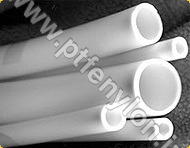
We are distinguished in the industry as one of the trusted manufacturers and exporters of the PTFE Tubes. All our tubes are chemical resistant and efficiently find their applicability across many chemical processing industries. These tubes are cautiously designed in compliance with the set industry norms and standards. Further, to avoid corrosion and rust, we pack the entire collection of PTFE Tubes with optimum packaging material and make it available within prime time.
Features:
- Optimum temperature resistivity
- Electrically insulated
- Non-flammable
Versatile Application Across IndustriesPTFE tubes are widely employed in chemical processing, food handling, medical, and electronics sectors due to their remarkable resistance to chemicals, corrosion, and UV exposure. Their smooth surface and flexibility facilitate easy installation even in complex setups, while their compliance to FDA and ROHS norms ensures safety in sensitive environments.
Customizable for Precise NeedsWith options for extruded or molded manufacturing, PTFE tubes can be customized in diameter, thickness, and length according to your project requirements. Standard widths range from 6 mm to 25 mm, making these tubes adaptable for a variety of flow rates and operating conditions.
FAQs of PTFE Tubes :
Q: How is the flexibility of PTFE tubes beneficial in practical applications?
A: The high flexibility of PTFE tubes enables effortless installation in tight and intricate spaces, accommodating bends without risk of cracking. This property is especially useful in systems that require frequent assembly or movement, such as laboratory setups and automated machinery.
Q: What manufacturing processes are used for PTFE tubes and how do they impact the final product?
A: PTFE tubes are produced through extrusion or molding, both ensuring a smooth surface finish. Extrusion allows for longer, continuous lengths, while molding can offer precision in thicker or more complex tube shapes. The chosen process affects customization options, durability, and cost-efficiency.
Q: Where can PTFE tubes be used given their resistance to chemicals and corrosion?
A: PTFE tubes are ideal for environments where exposure to harsh chemicals or corrosive substances is frequent, such as chemical plants, laboratories, pharmaceutical facilities, and food processing units. Their robust resistance ensures longevity and reliability in these settings.
Q: What are the advantages of PTFE tubes low friction coefficient?
A: With a very low friction coefficient (0.050.10), PTFE tubes minimize resistance, making them suitable for transferring fluids, powders, or gases without clogging or loss of pressure. This attribute is particularly valuable in pneumatic and hydraulic systems.
Q: How do PTFE tubes comply with safety and quality standards?
A: PTFE tubes are manufactured to conform to FDA and ROHS regulations, ensuring they are safe for use in food contact, medical applications, and environmentally conscious settings. Their production process guarantees consistent quality and safety.
Q: Can PTFE tubes be customized for specific projects?
A: Yes, PTFE tubes are highly customizable in terms of outer diameter (1 mm to 300 mm), thickness (0.5 mm to 6 mm), and length (standard 12 m or as required). This versatility allows sourcing the ideal tube dimensions for virtually any industrial or laboratory application.
 Send Inquiry



 Send Inquiry

 Send Inquiry


